Sensory
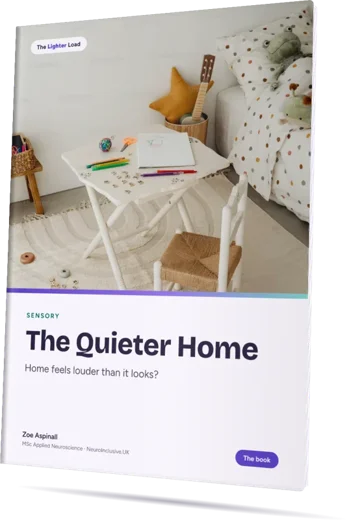
The Quieter Home
Home feels louder than it looks?
Lighting, noise, textures and clutter: the load your child carries before anyone says a word.
For parents of autistic, ADHD and otherwise neurodivergent children. Find out what's using up your child's energy at home, and the changes that give it back.
Meet Zoe in a free 8-minute video.

Created by Zoe Aspinall MSc, SEND specialist teacher, SEND parent and author of Designing Homes for All Brains
Meet Zoe · 8 minutes
It’s often not behaviour. It’s load.
In eight minutes, Zoe explains why home can feel so hard for a neurodivergent child, and for you, and where the changes start.

Meet Zoe · 8 minutes
Video coming soon
Free assessment · about ten minutes
36 questions about your home and routines. Your personalised report shows which part of family life to start with, and the first changes to make.
Full free training with Zoe
8 Steps to Lighten the Load: Zoe's full training on all eight programmes, and how they fit together.
Watch the full trainingEight programmes, one for each part of family life. Start with the one that's hardest at the moment.
Not sure which? The free assessment will tell you.
Sensory
Home feels louder than it looks?
Lighting, noise, textures and clutter: the load your child carries before anyone says a word.
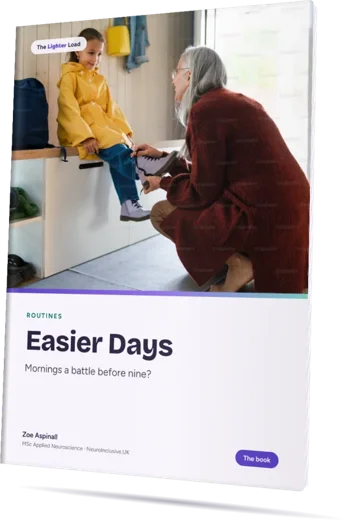
Routines
Mornings a battle before nine?
Mornings, leaving the park, screens off, after school: making the moment of change cost less.
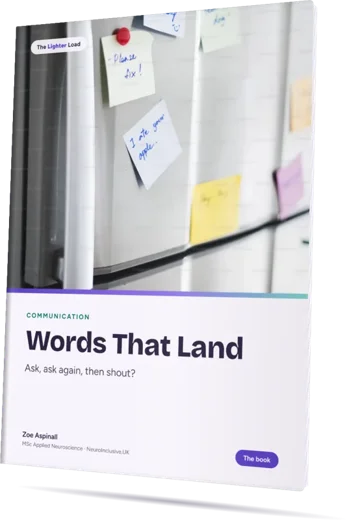
Communication
Ask, ask again, then shout?
When it looks like they're not listening, often the message isn't landing. How to change that.
Social life
Playdates and parties end in tears?
Friendships, playdates, siblings and family: designing the social side of life around your child.
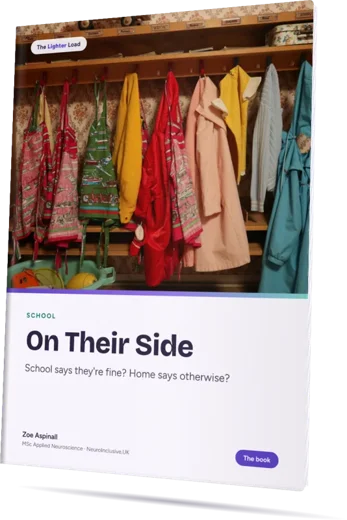
School · UK edition
School says they're fine. Home says otherwise?
Your rights, the SEND system and EHCPs, and how to get school to make the changes your child needs.
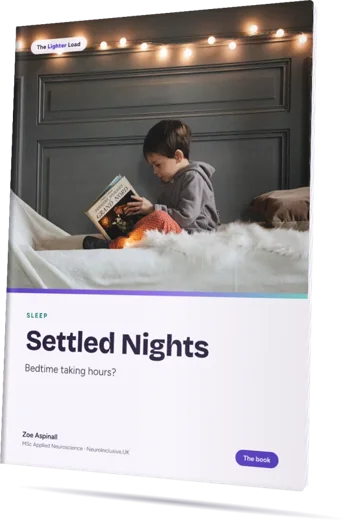
Sleep
Bedtime taking hours?
Bedtime starts two hours before bed. The evening environment that helps a busy brain switch off.
Emotional regulation
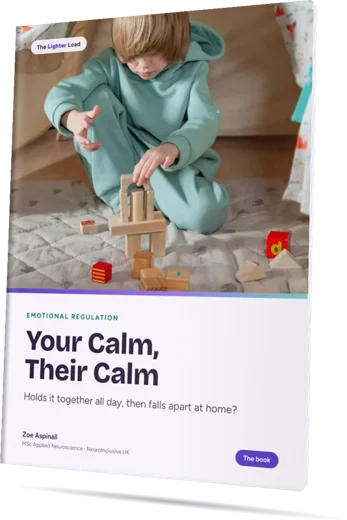
Holds it together all day, then falls apart at home?
Overload, shutting down and big feelings: what's happening in your child's brain, and how your calm brings them back.
Your wellbeing
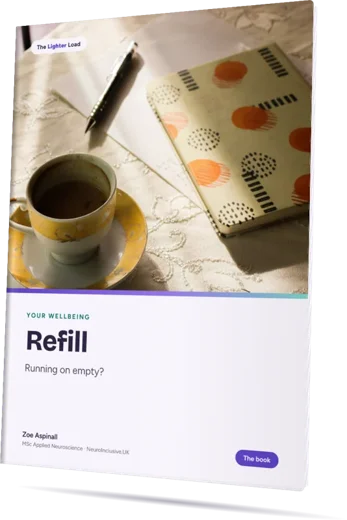
Running on empty?
Looking after your child starts with looking after you. Spotting burnout, sharing the load and finding support.
A neurodivergent brain spends a lot of energy on things other brains filter out without noticing: the hum of the fridge, the overhead light, a three-part instruction, a change of plan. By the evening, there's nothing left.
Most advice tries to change the child. The approach here is to change what the child has to cope with. Small changes to light, sound, routine, language and expectations take load away, and when there's less load there's less to fall apart over.
Yes. The 36-question assessment, your scores and your personalised report are free. You'll be asked for your name and email so we can save your results.
No. The programmes are about the environment around your child, so they're useful whether you have a diagnosis, are on a waiting list, or just know your child's brain works differently.
Online, in your own time. You sign in, take the programme's assessment, read your report, work through the lessons and download the printables. You can start the same evening, then work through the rest at your own pace.
No. It's for any child whose nervous system finds everyday life harder: autistic, ADHD, sensory differences, anxiety, or no label at all. The assessment looks at what your child finds hard, whatever the reason.
The ideas work at any age, from little ones to teenagers. Where things look different at different ages, the lessons and printables say so, and the assessment is about your child as they are now.
It's yours to keep. Everything you buy stays in your account, and everything you download is yours. Revisit it as your child grows.
No. It's practical education for parents, grounded in neuroscience. It doesn't replace your doctor or any of the professionals working with your child, and it works well alongside them.
Email admin@neuroinclusive.uk within 30 days and we'll refund you in full.
“Every environment either supports a child's brain or drains it. Most homes drain it, not because anyone got it wrong, but because nobody designed them for that child's brain at all.”
Zoe Aspinall MSc is a SEND specialist teacher and a SEND parent, with 30 years' experience in classrooms, school leadership and alternative provision, in the UK and internationally. She holds an MSc in Applied Neuroscience from King's College London, and developed the Ecological Inclusion Framework by bringing together research from neuroscience, psychology, communication and environmental design. Every NeuroInclusive programme is built on it, and turns it into practical changes you can make at home this week.

Zoe is the author of Designing Homes for All Brains, which sets out the Ecological Inclusion Framework for parents and carers. The programmes put it into practice, one part of family life at a time.
MSc Applied Neuroscience (King's College London) · PGCE · PGCert · BA (Hons)
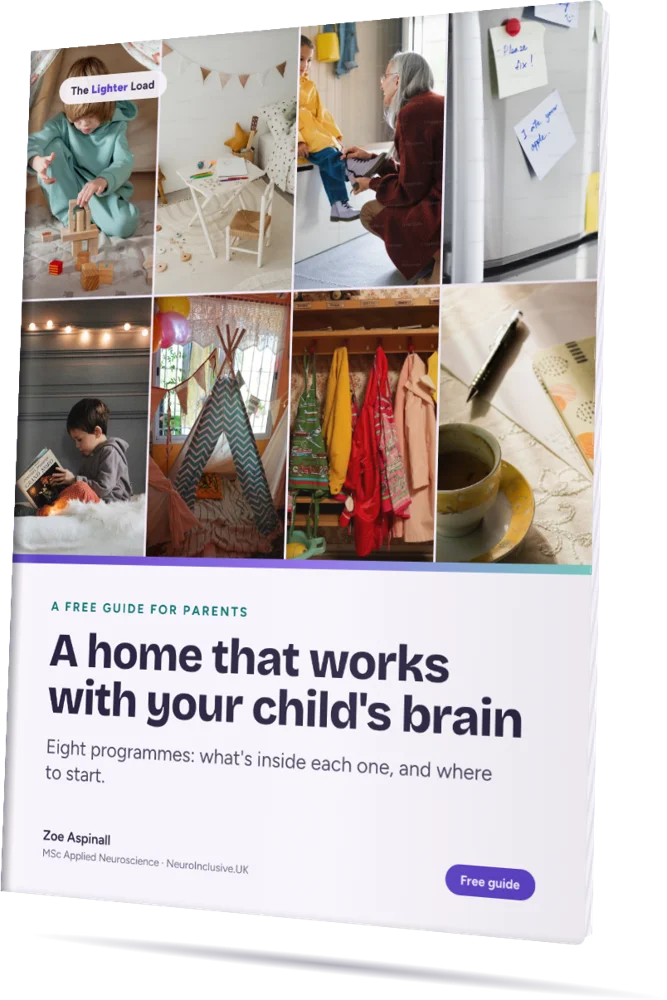
Free guide · 22 pages
Everything in The Lighter Load in one free guide: what's inside each of the eight programmes, how they fit together, where to start, and seven small changes to try this week.